MARVEL MARATHON DEEP DIVE
THOR: THE
DARK WORLD.
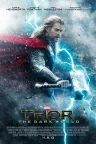
Patty Jenkins left Thor: The Dark World over the script Marvel wanted, Alan Taylor took over from Game of Thrones, and test audiences forced Marvel to reverse Loki’s planned death in reshoots.
A DIRECTOR WHO STEPPED BACK, ONE WHO WALKED AWAY, AND ONE FROM TELEVISION
HOW THOR’S SEQUEL WENT THROUGH THREE DIRECTORS BEFORE A FRAME WAS SHOT
Kenneth Branagh, who had directed 2011’s Thor, turned down a return for the sequel almost immediately. He’d spent three years developing and shooting the first film and wanted time away from the franchise rather than moving straight into a second one: “When the first one was finished, essentially it had been three fantastic years of my life, but I needed to recharge on something else,” he said, adding that he “wasn’t ready to go straight into another one.”
Marvel announced Patty Jenkins as his replacement on 13 October 2011. Jenkins had her own take on the sequel, a story she’s described as closer to a Romeo and Juliet-style space opera, with Jane Foster trapped on Earth and Malekith hiding dark energy inside the planet itself. By December 2011 she’d left the project over the script Marvel actually wanted to shoot rather than the one she’d pitched: “I did not believe that I could make a good movie out of the script that they were planning on doing,” she said. She’s also been candid that the decision carried an added weight as a woman being considered to direct a major comic-book tentpole.
“I think it would have looked like it was my fault. It would’ve looked like, ‘Oh my God, this woman directed it and she missed all these things.’”
Patty Jenkins, on her decision to leave Thor: The Dark World rather than direct a script she didn’t believe in
Marvel hired Alan Taylor before the end of that same month, drawn to his work directing episodes of Game of Thrones rather than any blockbuster credential of his own. Thor: The Dark World is often described as Taylor’s first feature, which overstates the case: he’d already directed three small, little-seen films, Palookaville, The Emperor’s New Clothes and Kill the Poor. What Marvel was actually betting on was scale rather than experience. Nothing in that earlier work came close to a Marvel Studios budget or a Marvel Studios audience, and this remained by far the biggest production he’d taken on.
FIVE NAMES ON THE SCREENPLAY, AND AN ENDING TAYLOR DIDN’T CHOOSE
THE WRITERS WHO BUILT THE SCRIPT, AND THE RESHOOTS THAT REWROTE THE ENDING
The finished film carries five writing credits. Don Payne and Robert Rodat share story credit, with Christopher Yost, Christopher Markus and Stephen McFeely credited for the screenplay; Marvel brought Rodat in for a rewrite pass in January 2012, after Taylor had already signed on. Payne, who had also co-written the first Thor, died of bone cancer on 26 March 2013, aged 48, months before the film reached theatres.
Taylor has said the film that reached theatres differs from the one he shot, in tone and in outcomes reworked after he’d already turned in a cut. His own version, he’s said, carried “more childlike wonder” and “a slightly more magical quality,” built around imagery of children and stranger magical occurrences bleeding into Earth once the Convergence began. Marvel’s reshoots and re-editing reversed two of his endings directly: “people [such as Loki] who had died were not dead, people who had broken up were back together again,” he said, leaving him with a clear preference for his own cut over the released one: “I think I would like my version.”
Taylor has since linked the strain of that process to a harder stretch in his career overall, one this film shares equally with 2015’s Terminator: Genisys rather than carrying alone: “The double punch of The Dark World and Terminator: Genisys getting torn apart by critics and fans” dampened his enthusiasm for filmmaking, he’s explained.
“I had lost the will to make movies. I lost the will to live as a director. I’m not blaming any person for that. The process was not good for me.”
Alan Taylor, on the combined toll of Thor: The Dark World and Terminator: Genisys
A RESPECTED ACTOR, SIX HOURS IN THE MAKEUP CHAIR EVERY DAY
WHY CRITICS CALLED MALEKITH FORGETTABLE, AND WHY ECCLESTON AGREED
Malekith became one of the more consistently criticised villains of Marvel’s Phase Two, with retrospective coverage describing him as underwritten and wasted against the rest of the cast, a verdict that sits oddly next to the actor cast in the role. Christopher Eccleston had already played the title role in Doctor Who and headlined 28 Days Later, and critics have pointed to how little the finished film actually gives him to do, with most of his dialogue amounting to generic villain lines rather than the character work his casting seemed to promise.
Eccleston’s own account of making the film grew more pointed over time. Close to its release, he described the demands of playing Malekith in largely practical terms, six hours of prosthetic makeup a day that “made me suitably angry.” In separate interviews years later, his tone had hardened considerably: he said Marvel had misled him about what the job actually involved, “Marvel were dishonest to me because they never, ever let me know that there’d be that amount of make-up,” and was blunt when asked whether money had been his real reason for taking the part: “Money. That’s exactly what I felt.”
“Just a gun in your mouth.”
Christopher Eccleston, on his experience making Thor: The Dark World
A FORCE OLDER THAN ASGARD, HANDED TO A COLLECTOR
THE AETHER MALEKITH WANTED, AND THE MID-CREDITS SCENE THAT POINTED TO GUARDIANS OF THE GALAXY
The plot turns on the Convergence, a once-every-five-thousand-years alignment of the Nine Realms that briefly opens passages between them, and the Aether, a sentient, reality-corrupting substance that predates the Realms themselves. Malekith and his Dark Elves had tried to use the Aether to plunge the universe back into darkness before Asgard’s armies stopped them millennia earlier; when Jane Foster stumbles into a Convergence-opened rift on Earth and absorbs the Aether herself, it draws Malekith out of hiding and back into the story centuries after his apparent defeat.
Once Thor and his allies recover the Aether from Jane at the end of the film, the mid-credits scene sends it somewhere else entirely. Sif and Volstagg deliver it to the Collector, played by Benicio del Toro in his first MCU appearance, reasoning that keeping it on Asgard alongside the Tesseract would put two dangerous objects in the same place. The Collector accepts it, and his closing line, “One down, five to go,” does the scene’s real work: it identifies the Aether as one of six Infinity Stones for the first time on screen, and sets up both his own appearance in the following year’s Guardians of the Galaxy and the Infinity Stones arc the MCU would spend the rest of the decade building toward.
THE REWATCH
A BIGGER ROLE FOR LOKI, A DEATH THAT DIDN’T STICK, AND A WEAKER CRITICAL VERDICT
Loki got a far larger, more central role here than in either of his previous appearances, teaming with Thor against a shared enemy for most of the back half of the film rather than opposing him. Tom Hiddleston has said he and Chris Hemsworth shot Loki’s death on Svartalfheim as a genuine death scene: “Loki’s death on Svartalfheim was written as a death, and I would say Chris and I played that scene for real.” Test audiences didn’t buy it. “In test screenings, the audience didn’t accept it,” Hiddleston said. “They said, ‘He’s obviously coming back. That didn’t really happen.’” Kevin Feige and Taylor reworked the ending quickly once those responses came in, landing on the twist that closes the film instead, Loki alive, disguised as an Asgardian guard and sitting on Odin’s throne in his place. Hiddleston has credited the surprise specifically to not knowing it was coming himself: “It’s such a great twist and the reason it works is that I didn’t even know it was a twist.”
Thor: The Dark World opened to $85.7 million domestically and finished with $206.4 million in the US and $644.8 million worldwide, a clear commercial success against a weaker critical reception. Rotten Tomatoes lists a 67% critics’ score, with its official consensus calling it a film that “may not be the finest film to come from the Marvel Universe” while still crediting it with “plenty of the humor and high-stakes action that fans have come to expect.” Metacritic’s more conservative 54 placed it among the more weakly reviewed entries of Marvel’s Phase Two, a reputation that has stuck to the film in retrospective rankings more than its box office ever suggested it would.
For a first watch, Thor: The Dark World sits in the Marvel movies in release order guide directly after The Wolverine, continuing Marvel Studios’ build toward Phase Two’s own team-up in Avengers: Age of Ultron.
QUICK ANSWERS
THOR: THE DARK WORLD WATCH QUESTIONS
Do I need to watch anything before Thor: The Dark World?
Thor and The Avengers help most. The film opens with Loki imprisoned on Asgard for the attack on New York, and Jane Foster’s story continues directly from where the first film left off.
Is the mid-credits scene important?
Yes. Sif and Volstagg hand the Aether to the Collector, played by Benicio del Toro in his first MCU appearance, and his reaction confirms it as an Infinity Stone, directly setting up Guardians of the Galaxy.
Which Marvel Marathon guides include Thor: The Dark World?
It appears in the Marvel movies in release order guide, directly after The Wolverine. Marking it watched above updates your progress there and on the main tracker.
EDITORIAL NOTES
SOURCES AND UPDATES
Development, casting, production, critical reception and box-office details are checked against contemporaneous trade reporting and on-the-record cast and crew interviews, cited individually below.
- Yahoo Movies: Kenneth Branagh on declining to return to direct the sequel
- Collider: Patty Jenkins on leaving Thor: The Dark World
- The Mary Sue: Alan Taylor on the reshoots, the tonal changes and the combined backlash to this film and Terminator: Genisys
- Box Office Mojo: director, writing credits and running time
- The Playlist: Tom Hiddleston on Loki’s reworked death scene and the test-screening reversal
- SciFiNow: Christopher Eccleston on the makeup process near the film’s release
- ComicBookMovie.com: Eccleston on Marvel being “dishonest” about the makeup demands and taking the role for money
- NZ Herald: Eccleston’s “gun in your mouth” comment on the role
- Collider: retrospective on Malekith as an underwritten, wasted villain
- Box Office Mojo: Thor: The Dark World opening weekend, domestic and worldwide box office
- Rotten Tomatoes: Thor: The Dark World critic score and consensus
- Metacritic: Thor: The Dark World critic score