MARVEL MARATHON DEEP DIVE
THE INCREDIBLE
HULK.
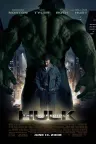
Edward Norton rewrote The Incredible Hulk’s script himself and pitched Marvel a longer, darker two-film arc. The studio said yes, then cut the film down and didn’t bring him back for The Avengers.
A FRESH START, NOT QUITE A CLEAN BREAK
WHY THIS HULK PICKS UP MID-CHASE RATHER THAN RETELLING THE ORIGIN
Marvel and Universal didn’t frame The Incredible Hulk as a direct sequel to Ang Lee’s 2003 film, but they didn’t disown it either. Louis Leterrier, coming off the action films Transporter 2 and Unleashed, described his job as standing beside Lee’s version rather than replacing it: “I didn’t want to make it different per se… I wanted to make it complimentary, you know, the two movies being — Ang’s movie is Ang’s movie,” he said. “It’s another director’s version of the Hulk, that’s it.”
That approach shows in how little of the origin the film actually repeats. A rapid opening title sequence covers the gamma accident and the Culver University lab incident in under two minutes, then picks up with Bruce Banner already years into hiding, working in a bottling plant in Rocinha, a real favela in Rio de Janeiro, training himself to control his pulse rather than retelling how he got there.
A SCRIPT REWRITTEN NEARLY EVERY DAY ON SET
EDWARD NORTON’S UNCREDITED PASS, AND THE DARKER TWO-FILM ARC HE PITCHED FIRST
Zak Penn wrote the credited screenplay and holds the sole WGA story-and-screenplay credit, but Edward Norton, hired to star in April 2007, rewrote large sections of the script himself as a condition of signing on, work Penn has said continued almost daily through much of the production.
“I laid out a two-film thing: the origin and then the idea of Hulk as the conscious dreamer, the guy who can handle the trip… And they were like, ‘That’s what we want!’ As it turned out, that wasn’t what they wanted.”
Edward Norton, on the longer, darker Hulk arc he originally pitched Marvel
Norton has said the two sides parted over scope more than a single disagreement. Once he and Marvel “looked at the amount of time that would’ve taken, and I wasn’t going to do that,” the ambitions scaled back to the single film that reached theatres, with his uncredited rewrite folded into a far shorter story than the one he’d first proposed.
A LONGER CUT THAT NEVER REACHED THEATRES
THE FIGHT OVER THE FINAL EDIT, AND WHY NORTON NEVER PLAYED BANNER AGAIN
By multiple contemporaneous accounts, Norton’s own preferred assembly ran well over two hours, against the 112-minute cut that reached theatres on 13 June 2008. Marvel, under Kevin Feige, held final-cut authority and trimmed the film to a leaner, more action-forward pace than Norton had wanted, a disagreement that outlasted the film’s release.
When Marvel announced in July 2010 that Mark Ruffalo, not Norton, would play Bruce Banner in The Avengers, Feige’s public explanation made the studio’s frustration explicit: “Our decision is definitely not one based on monetary factors, but instead rooted in the need for an actor who embodies the creativity and collaborative spirit of our other talented cast members,” he said. “The Avengers demands players who thrive working as part of an ensemble, as evidenced by Robert, Chris H, Chris E, Sam, Scarlett, and all of our talented casts.” Norton’s camp pushed back publicly at the time, and he didn’t return to the role.
A LEANER, GRAYER HULK
HOW THE EFFECTS TEAM MOVED AWAY FROM ANG LEE’S MORE STYLISED CREATURE
Visual effects supervisor Kurt Williams and the film’s effects houses, led by Rhythm & Hues, rebuilt the Hulk rather than reusing Industrial Light & Magic’s 2003 model, aiming for something more physically grounded. “Louis’ style of filmmaking is dramatically different, and stylistically our film was going to be different by virtue of that,” Williams said, describing a mandate to “push the character visually and behaviorally, giving him a greater range of emotions.”
Rhythm & Hues visual effects supervisor Betsy Paterson described Leterrier’s physical brief for the character directly: “Louis wanted Hulk to look lean and mean, not an ounce of body fat. Ropy, striated muscles and a lot of subsurface detail in the skin were also on the wish list.” The team also pulled the skin itself away from the more saturated, comic-book palette of the 2003 film, settling on a “gray-green coloration” with added “dappling and irregularity… so it felt natural” rather than glowing, and lightened the character’s eyes to make them “very reflective” so Banner’s emotions could register through the Hulk’s face.
Tim Roth’s Emil Blonsky became a deliberately uglier foil built to dwarf him, standing 11 feet to the Hulk’s 9 with, in Williams’s words, a skeleton that “would have grown in an irregular way,” so that “parts of his skeleton would literally grow to the outside of his body, exposing bones and some tissue.”
THE REWATCH
A STARK CAMEO, A QUIET RECEPTION, AND A FILM THE MCU CAME BACK FOR
The film closes with Robert Downey Jr. appearing as Tony Stark, approaching General Ross in a bar to float the idea of “a team,” a month after Iron Man had opened and one of the earliest deliberate links tying Marvel Studios’ infant shared universe together on screen. Reviews at release were mixed to positive: Rotten Tomatoes lists a 68% critics’ score against Metacritic’s 61, well above Ang Lee’s film on both counts, and it opened to $55.4 million domestically before finishing with $134.8 million in the US and roughly $265 million worldwide.
For years afterward it sat awkwardly in MCU continuity, acknowledged mainly through a single line in 2012’s The Avengers about Banner having broken Harlem on his last trip to New York, and kept off Disney+ by licensing complications until June 2023. That changed with 2025’s Captain America: Brave New World, which brought Harrison Ford into the role once played by the late William Hurt and brought Liv Tyler back as Betty Ross for her first MCU appearance since this film, roughly seventeen years on. For a first watch, it sits in the Marvel movies in release order guide directly after Iron Man, with no need to see Ang Lee’s 2003 film first.
QUICK ANSWERS
THE INCREDIBLE HULK WATCH QUESTIONS
Do I need to watch 2003’s Hulk before this one?
No. Marvel and director Louis Leterrier treated it as a fresh start rather than a sequel, and the film skips past a full origin retelling.
Is The Incredible Hulk connected to the rest of the MCU?
Yes. Tony Stark’s closing cameo ties it to Iron Man, and General Ross and Betty Ross both return in 2025’s Captain America: Brave New World, though Edward Norton never reprised Bruce Banner; Mark Ruffalo took over for The Avengers.
Which Marvel Marathon guides include The Incredible Hulk?
It appears in the Marvel movies in release order guide, directly after Iron Man. Marking it watched above updates your progress there and on the main tracker.
EDITORIAL NOTES
SOURCES AND UPDATES
Development, casting, production and box-office details are checked against contemporaneous trade reporting, on-the-record cast and crew interviews, and aggregator scores, cited individually below.
- Collider: Edward Norton on the two-film Hulk arc he originally pitched Marvel
- AWN/VFXWorld: Kurt Williams and Betsy Paterson on redesigning the Hulk and Abomination
- The Christian Science Monitor: Kevin Feige’s full statement on Edward Norton not returning for The Avengers
- Box Office Mojo: The Incredible Hulk opening weekend, domestic and worldwide box office
- Rotten Tomatoes: The Incredible Hulk critic score
- Metacritic: The Incredible Hulk critic score
- Variety: The Incredible Hulk’s 2023 arrival on Disney+ after fifteen years off the service