MARVEL MARATHON DEEP DIVE
SPIDER
MAN.
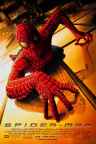
Spider-Man spent over a decade tangled in rights disputes, including an unmade James Cameron version, before Sony bought it from MGM and hired a horror director eighteen names down its own wishlist.
A DECADE STUCK IN RIGHTS LIMBO
THE VERSION JAMES CAMERON NEVER GOT TO MAKE
Marvel licensed the film rights to Spider-Man to Cannon Films in 1985 for a reported $225,000 over a five-year option. Cannon never got a film financed before its own finances collapsed, and the rights passed to 21st Century Film Corp in 1989. Rather than build toward one film, 21st Century split the character three ways: television rights to Viacom, home video rights to Columbia, and theatrical rights to Carolco Pictures.
Carolco hired James Cameron to write and direct in the early 1990s, and the budget he was developing against grew from $15 million to $50 million as the project took shape. Neither Cameron’s script nor a finished film ever reached a soundstage. Carolco’s finances collapsed, 21st Century filed for bankruptcy in 1994, and MGM bought its library and claimed the film rights outright, until a 1995 court ruling found the original 1985 licence had already expired. Multiple lawsuits between Carolco, 21st Century, Viacom and Columbia ran alongside all of it.
The tangle wasn’t cleared until 1999, a year after Marvel itself emerged from its own bankruptcy and was free to negotiate again. Sony bought the film rights outright from MGM in a settlement reportedly worth $7 million, a fraction of what Cameron’s abandoned production alone had been budgeted for nearly a decade earlier. None of that development history carried over into production. Sam Raimi’s writers built the film from scratch.
SONY’S NINETEENTH CHOICE
A HORROR DIRECTOR WHO PITCHED HIMSELF OVER EIGHTEEN OTHER NAMES
Sam Raimi’s own account of landing the job starts with being told he wasn’t wanted. His agent relayed word from the studio ahead of his pitch meeting: “There’s about 18 directors they’d rather have than you on a list.” Raimi’s reply, by his own telling: “OK, well, tell them I’m number 19.” Reported names on that list included Tim Burton, Michael Bay, Roland Emmerich, Barry Sonnenfeld, Ang Lee, Chris Columbus, Jan de Bont and M. Night Shyamalan, blockbuster names far removed from Raimi’s own résumé, built on the low-budget Evil Dead films and horror-adjacent work like Darkman.
“He came in and said it’s a soap opera about a boy who loves a girl, and that’s what I want to focus on.”
Amy Pascal, Columbia Pictures, on Raimi’s pitch
That framing matched what Pascal and studio chief John Calley already wanted from the film. Casting the lead took its own detours before Tobey Maguire won the part. Heath Ledger, riding the crossover success of 10 Things I Hate About You, was an early target, and turned it down: “It’s not for me. I would be taking someone else’s dream away.” James Franco tested for the lead across a six-week process, didn’t get it, and was cast as Harry Osborn instead. Maguire, coming off The Cider House Rules and Wonder Boys, won the role that July.
PRACTICAL FIRST, DIGITAL WHEN IT HAD TO BE
THE SCENE RAIMI WOULDN’T HAND OVER TO CGI
The web-slinging Spider-Man on screen is almost entirely a digital character, built by Sony Pictures Imageworks under visual effects supervisor John Dykstra. Raimi treated that as a last resort rather than a default, and pushed to shoot practically whenever a stunt could plausibly be performed on set. The clearest example is the high school cafeteria scene, where Peter catches a falling lunch tray and its contents one-handed. Maguire performed the catch himself, with the tray glued to his hand, across 156 takes.
“This next gag here, where he catches all this stuff, he actually did that. Pretty good. Take 156.”
John Dykstra, visual effects supervisor, in the film’s behind-the-scenes material
Kirsten Dunst made the same point about the same scene: “Not CGI, by the way. That’s all Tobey, which is pretty impressive. They used sticky glue stuff to stick his hand to the tray.” Reaction to the effects that were digital split from the start. Roger Ebert’s review singled out the CGI Spider-Man mid-swing as looking like “a video game figure, not like a person having an amazing experience,” while Steven Spielberg told Ebert directly that he liked the choice: “Sometimes on Spider-Man, which I quite liked, I enjoyed the CGI effects that made Spider-Man’s flying look like a comic book and not like reality.”
PULLED FROM SCREENS AFTER SEPTEMBER 11
THE TRAILER SONY COULDN’T RELEASE AGAIN
Sony’s first teaser trailer, released in July 2001, ended with a bank robbery: the getaway helicopter’s escape stopped cold when Spider-Man snapped it backward in a web strung between the towers of the World Trade Center, then hauled the thieves out. An accompanying poster showed the towers reflected in Spider-Man’s mask. Neither shot was ever part of the finished film. Both were made specifically for the marketing campaign.
The teaser was still running in theatres on 11 September 2001. Sony pulled it and the poster in the days after the attacks, and released a new teaser that November with every Twin Towers reference removed. The one addition Raimi made, rather than removed, was a scene of ordinary New Yorkers helping Spider-Man corner the Green Goblin on the Queensboro Bridge, widely read afterward as a direct response to the city’s mood that autumn. The result is a film that opened eight months later, set in a New York it never once shows with its skyline intact.
THE REWATCH
THE FIRST FILM TO OPEN OVER $100 MILLION, AND WHAT IT PROVED
Spider-Man opened on 3 May 2002 to $114.8 million from 3,615 theatres, the first film in history to cross $100 million in its opening weekend. It went on to gross $403.7 million domestically and $804.5 million worldwide against a $139 million budget, more than double X-Men’s budget two years earlier, and finished as the highest-grossing release of 2002.
Reviews were strong from the start: Rotten Tomatoes lists a 90% critics’ score from 278 reviews against a 67% audience score, and Metacritic’s aggregate sits at 73. Ebert’s own review split much the way many did, calling Maguire “pitch-perfect” as Peter Parker while finding the action sequences that followed each transformation into Spider-Man thinner by comparison.
Its success did something Blade and X-Men, both ensemble or genre-adjacent hits, hadn’t: prove that a single masked lead, alone above the title, could open bigger than almost anything else in the medium. Every solo superhero film that followed, through to the MCU’s own Iron Man six years later, arrived in an industry that had already watched Spider-Man do that math first. For a first watch, it sits in the Marvel movies in release order guide, a few weeks after Blade II in that same connected scope.
QUICK ANSWERS
SPIDER-MAN WATCH QUESTIONS
Do I need to watch anything before Spider-Man?
No. It’s a self-contained origin story and works as a starting point on its own, separate from the MCU’s own continuity.
Is Spider-Man connected to the MCU?
Not through its own story. It sits in the Marvel Marathon’s wider connected live-action scope alongside Blade, Blade II and X-Men, tracked separately from central MCU continuity.
Which Marvel Marathon guides include Spider-Man?
It appears in the Marvel movies in release order guide, shortly after Blade II. Marking it watched above updates your progress there and on the main tracker.
EDITORIAL NOTES
SOURCES AND UPDATES
Rights history, casting, production and box-office details are checked against contemporaneous and retrospective trade reporting, on-the-record cast and crew interviews, and aggregator scores, cited individually below.
- CBR: how Sony ended up owning the Spider-Man film rights, including the 1999 deal with MGM
- SlashFilm: the unusual way Sam Raimi landed Spider-Man
- ScreenRant: Raimi was Sony’s 19th choice to direct Spider-Man
- Den of Geek: the actors who were almost cast as Spider-Man
- ComicBook.com: the practical effects behind Spider-Man’s cafeteria scene
- RogerEbert.com: Roger Ebert’s original Spider-Man (2002) review
- SlashFilm: Steven Spielberg on what he liked about Sam Raimi’s Spider-Man CGI
- CBR: how Sam Raimi’s Spider-Man trailer changed after showing the Twin Towers
- Box Office Mojo: Spider-Man (2002) release page, budget, opening weekend and total box office
- Rotten Tomatoes: Spider-Man (2002) critic and audience scores
- Metacritic: Spider-Man (2002) critic and user scores