MARVEL MARATHON DEEP DIVE
HULK.
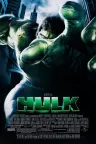
Ang Lee, an Oscar nominee with no action-movie credit to his name, turned Hulk into a Freudian family tragedy, then performed the character’s own motion capture because the Hulk existed only in his head.
AN ARTHOUSE DIRECTOR FOR A SUMMER TENTPOLE
WHY MARVEL HANDED ITS STRONGMAN TO THE DIRECTOR OF SENSE AND SENSIBILITY
When Marvel and Universal needed a director for a $137 million adaptation of one of its biggest characters, they hired someone with no action-movie experience and no comic-book background at all. Ang Lee had spent the previous decade on Sense and Sensibility (1995), The Ice Storm (1997) and Crouching Tiger, Hidden Dragon (2000), the wuxia romance that had just collected ten Academy Award nominations. He signed on to direct Hulk in January 2001, after turning down Terminator 3: Rise of the Machines, and was unhappy enough with the existing screenplay that he brought in his longtime collaborator James Schamus to rebuild it around a character the earlier draft had barely used: Bruce Banner’s father.
Lee has been consistent about what actually interested him in the material. Asked about his approach around the film’s release, he located the Hulk in the subconscious rather than in spectacle: “It’s the subconsciousness. It’s not guarded by our consciousness or behavior or rationale or social code or morality.” He framed David Banner’s presence in the story the same way: “The father is always very important, whether you take one form or another, the father is always a big shadow. That’s part of the reason he is the Hulk.”
A COMIC BOOK BUILT INTO THE FILM LANGUAGE
THE SPLIT-SCREEN PANELS LEE TREATED AS GRAMMAR, NOT DECORATION
Hulk uses multi-panel screen splits more heavily and more deliberately than any other major studio comic-book adaptation before or since. Frames slide over and past each other, wipe into new panels mid-scene, and sometimes hold three or four images on screen at once, a visual strategy Lee and editor Tim Squyres built into the film from the start rather than adding as a novelty. Lee has said he wanted the technique to double as narration rather than sit as a stylistic flourish: “I like to go further and choreograph them as part of the film language, not just as transitional or display, which I did sometimes.”
The choice split opinion on release. Some critics found the constant panel breaks distracting, layered on top of a film already carrying long stretches of dialogue and lab-set exposition. Rotten Tomatoes’ collected critics’ consensus for Hulk still reads, in part, that there is “too much talking and not enough smashing.” No studio comic-book adaptation before or since has leaned on the technique as heavily, and it remains one of the most specific, most discussed choices in the film even among viewers who otherwise dislike it.
A CHARACTER WHO EXISTED ONLY IN THE DIRECTOR’S HEAD
WHY LEE PERFORMED THE MOTION CAPTURE HIMSELF
Hulk made its title character entirely computer-generated for essentially the whole film, built by Industrial Light & Magic across roughly 600 effects shots. No actor in a suit and no bodybuilder in makeup stood in for the character on screen, a real technical risk at a moment when convincing full-CG lead performances were still rare. ILM had nobody to reference for the character’s movement until Lee, by his own animation supervisor’s account, solved the problem himself.
“Ang replied that the Hulk only existed in his mind.”
Colin Brady, ILM animation supervisor, on suggesting Lee cast a reference actor
Brady’s fix was to put the director in the suit instead. “Recognizing that Ang was a good actor himself and always willing to act out what he wanted, I suggested getting Ang in a motion capture suit,” he said, and Lee agreed, performing reference motion capture for several of the character’s key beats himself. Co-star Josh Lucas, looking back two decades later, described a director pushing his effects team past what the technology could yet do: “I don’t think the technology was quite where his brain was.” Reviews at the time were harder on the results than history has been since, but Hulk remains one of the few blockbusters built entirely around one director’s specific, unshared idea of how its lead character should move.
A LEAD WHO PLAYED THE MAN, NOT THE MONSTER
ERIC BANA, NICK NOLTE AND A FAMILY DRAMA SHOT LIKE A GREEK TRAGEDY
Eric Bana was a recent discovery rather than an established star when Lee cast him as Bruce Banner. Lee sought him out after seeing Bana’s breakout dramatic turn as a real-life killer in the Australian film Chopper, and Bana was confirmed for the role in October 2001, some twenty months before release. Bana has since described the part as inherently frustrating to play, since almost none of the character’s release belonged to him on screen: “It was always going to be a frustrating character to play. The challenge is to convey all that pent-up, repressed energy, emotion,” he said, noting that the job of visible catharsis belonged to the alter ego, not to Banner himself.
Nick Nolte, cast as Bruce’s estranged and increasingly unstable father David Banner, has said Lee won him over by pitching the film in literary rather than comic-book terms: “I don’t know how to make a comic book. I know how to make a Greek tragedy.” Nolte took the pitch seriously enough to bring his own research to set, at one point taking Lee up to a home laboratory to prick his own finger and show him blood cells under a microscope as a reference for how the film’s genetic transformations might look.
“It’s a Greek tragedy really based on Father/Son.”
Nick Nolte, on playing David Banner
THE REWATCH
A RECORD OPENING, A HISTORIC COLLAPSE, AND A FILM CRITICS CAME BACK FOR
Hulk opened on 20 June 2003 to $62.1 million from 3,660 theatres, a record for a June release at the time, ahead of the $54.9 million Austin Powers: The Spy Who Shagged Me had set and ahead of the original X-Men’s $54.5 million debut, though short of X2’s $85.6 million seven weeks earlier. Then the audience didn’t come back. The film’s second weekend fell to roughly $18.8 million, a drop of nearly 70%, one of the steepest second-weekend collapses recorded for any wide release to that point. It finished with $132.2 million domestically and $245.3 million worldwide against its $137 million budget, a result read at the time as a disappointment, and Universal did not move forward with a sequel.
Contemporary reviews were genuinely split, and the ending was a specific flashpoint: David Banner’s transformation into a shapeless energy being, his destruction, and Bruce’s retreat into guilty isolation in the Amazon read to many 2003 audiences as an anticlimax after two hours of restraint, rather than the kind of victory a summer tentpole usually delivers. Rotten Tomatoes lists Hulk at 63% from critics against a 29% audience score, and Metacritic’s aggregate sits at 54. Roger Ebert was among the more generous critics at the time, giving the film three stars and calling it “the most talkative and thoughtful recent comic book adaptation,” a movie “not so much about a green monster as about two wounded adult children of egomaniacs.”
The reputation has shifted since, especially against its 2008 franchise restart, The Incredible Hulk, which traded Lee’s psychology for straighter action. For a first watch, Hulk sits in the Marvel movies in release order guide directly after X2, the most tonally opposite pair of consecutive entries in that whole connected scope.
QUICK ANSWERS
HULK WATCH QUESTIONS
Do I need to watch anything before Hulk?
No. It’s a self-contained origin story with its own continuity, separate from both the MCU and the 2008 Incredible Hulk reboot.
Is this the same continuity as The Incredible Hulk (2008)?
No. The Incredible Hulk was a full reboot rather than a sequel, and beyond Bruce Banner’s exile in South America, the two films don’t share continuity.
Which Marvel Marathon guides include Hulk?
It appears in the Marvel movies in release order guide, directly after X2. Marking it watched above updates your progress there and on the main tracker.
EDITORIAL NOTES
SOURCES AND UPDATES
Production, casting, visual-effects and box-office details are checked against contemporaneous and retrospective trade reporting, official visual-effects trade coverage and on-the-record cast and crew interviews, cited individually below.
- CBR: Ang Lee on the Hulk’s subconscious, father-son psychology and the split-screen panel technique
- befores & afters: ILM animation supervisor Colin Brady on Ang Lee performing his own motion capture for the Hulk
- CinemaBlend: Josh Lucas on Ang Lee’s frustration with 2003-era CGI limitations
- Variety: Eric Bana cast as Hulk after his breakout role in Chopper
- Hypebeast: Eric Bana on Bruce Banner being “a frustrating character to play”
- CBR: Nick Nolte on playing David Banner as Greek tragedy
- Rotten Tomatoes: Hulk (2003) critic and audience scores and critics’ consensus
- Metacritic: Hulk (2003) critic score
- RogerEbert.com: Roger Ebert’s original three-star Hulk (2003) review
- Box Office Mojo: Hulk (2003) budget, opening weekend, second weekend and total box office
- CBS News: Hulk’s record-setting June opening weekend, June 23, 2003