MARVEL MARATHON DEEP DIVE
FANTASTIC
FOUR.
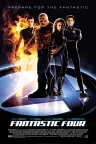
Tim Story got the job after a decade of stalled Fox directors, and shot Fantastic Four while Michael Chiklis endured a Thing suit so punishing he hired a psychiatrist to get through the days.
THE MOVIE THAT WAS NEVER MEANT TO BE SEEN
THE $1 MILLION FANTASTIC FOUR MADE ONLY TO KEEP THE RIGHTS ALIVE
Twelve years before Tim Story’s cast ever signed on, a different Fantastic Four film already existed. Producer Bernd Eichinger had bought the screen rights from Marvel through his company, Constantin Film, in 1986, on an option that would lapse unless a film went into production by the end of 1992. With no studio willing to finance a proper version in time, Eichinger turned to B-movie producer Roger Corman, whose company financed a $1 million adaptation shot over about three weeks, directed by Oley Sassone and starring Alex Hyde-White as Reed Richards, Rebecca Staab as Sue Storm, Jay Underwood as Johnny Storm and Michael Bailey Smith as Ben Grimm.
A release had been pencilled in for May 1994. It never happened. The film was pulled with no public explanation, and the accounts of why diverge from there: Eichinger later said Marvel’s Avi Arad bought him out and had prints destroyed rather than let a cut-rate version reach theatres ahead of a bigger one. Sassone, asked about it afterward, was blunter about the business logic behind the whole exercise: “Gotta remember man, it’s called the movie business. It’s not called movie art.” Bootleg VHS copies still reached convention tables and later the internet, which is how most people have ever seen it.
None of that carries into the 2005 film. Different studio, different rights holder, different script, and no returning cast or crew: Story’s Fantastic Four owes the 1994 version nothing beyond sharing a title and a comic-book source.
A DECADE OF FALSE STARTS AT FOX
FIVE DIRECTORS AND NO FANTASTIC FOUR FILM TO SHOW FOR IT
20th Century Fox hired Chris Columbus to write and direct in 1995, working with Michael France on an early script before stepping back into a producing role. Peter Segal was attached by 1997 and left within the year; Sam Hamm took a pass at the screenplay in 1998. Raja Gosnell signed on in 1999, and Fox announced a July 2001 release before Gosnell left in 2000 to direct Scooby-Doo instead.
Peyton Reed took the job next, in April 2001, and spent roughly a year developing his own version with a rotating set of writers, including an idea to set the team in the 1960s, closer to their original comic debut, rather than tell another modern-day origin story. Fox wanted something else.
“Fox at that time had a very specific idea; they wanted to pitch it much younger than I wanted to and I always felt like they were treating those characters like b-level characters. I never felt like they understood the real strength of that property.”
Peyton Reed, on leaving Fantastic Four
Reed exited, and Fox hired Tim Story in April 2004, largely on the strength of his 2002 ensemble comedy Barbershop. Principal photography began that August in Vancouver, less than a decade after Columbus had first been hired and less than a year and a half before the film reached theatres.
FOUR LEADS, AND A SUIT ONE OF THEM FOUGHT TO KEEP REAL
CASTING RICHARDS, STORM, STORM AND GRIMM, THEN BUILDING GRIMM BY HAND
Story’s production settled its central four in 2004: Ioan Gruffudd as Reed Richards, Jessica Alba as Sue Storm, Chris Evans as Johnny Storm and Michael Chiklis as Ben Grimm. Chiklis had wanted the part since childhood, having grown up reading the Fantastic Four comics. His one real condition was that The Thing be built practically rather than generated by computer, so an audience could still read a human performance underneath the rock.
That condition came at a cost. Effects house Spectral Motion, led by Mike Elizalde, built the suit from foam latex layered over an inner body glove and rigid support pieces, with mechanical hands worked partly by Chiklis’s own fingers. Early facial application alone ran five to five-and-a-half hours before the process was streamlined closer to two hours, then to roughly seventy-five minutes later in the shoot. Elizalde has said the performance underneath it was almost entirely Chiklis’s own: “It’s probably 99% performance on Michael’s part and maybe 1% us trying to make him as comfortable as possible.”
Comfortable is relative. The suit was sealed with glue once locked in place, and Chiklis has described the interior as unbearably hot, triggering claustrophobia he didn’t otherwise experience: “Once they locked the Thing with the glue, I couldn’t get out of it… I’m not claustrophobic at all. But in that situation, I was.” The production brought in a psychiatrist to help him manage it across long shooting days. “There were two occasions where I flipped out and said, ‘I got to get out.’ They pulled everything off me, and that cost us hours,” he said.
Julian McMahon was cast as Victor Von Doom, reworked by the screenwriters into the CEO of Von Doom Industries, the company that bankrolls and joins the astronauts’ space mission, rather than the exiled monarch of Latveria who splits his time between science and sorcery in the comics. Critics later noted how closely the resulting arc, a scheming board member exposed, then transformed into a vengeful, half-metal villain, tracked the Norman Osborn and Green Goblin plot of Spider-Man three years earlier.
A COMEDY DIRECTOR FOR A DARKER MOMENT IN THE GENRE
WHY MARVEL WANTED SOMEONE WHO COULD MAKE A CROWDED ROOM FUNNY
Producer Avi Arad has said what drew him to Tim Story was less about visual effects experience, which Story had none of, than about handling a large ensemble with warmth rather than friction. Arad has described watching Story’s Barbershop and seeing exactly the dynamic Fantastic Four would need.
“There was this one room with all these characters in it, and Tim showed me the ability to let a movie breathe and be fun.”
Avi Arad, on hiring Tim Story to direct Fantastic Four
The finished film leaned firmly toward comedy and spectacle over the grimmer register other releases had already made fashionable, arriving a year after Spider-Man 2 and about two weeks before Batman Begins reset expectations for how dark a comic-book adaptation could go. Reviewers split hard on that choice. Rotten Tomatoes’ collected critics’ consensus calls the film “marred by goofy attempts at wit, subpar acting, and bland storytelling,” while other writers, at the time and since, have read the same brightness as a deliberate, welcome break from an increasingly self-serious genre. The commercial result didn’t match the reviews either way. Audiences kept showing up regardless of which side of that argument they’d read.
THE REWATCH
A REAL HIT, A ROUGH SCORE, AND THE ROAD TO CAPTAIN AMERICA
Fantastic Four opened on 8 July 2005 to $56.1 million from 3,602 theatres on a reported $100 million budget, and went on to $154.7 million domestically and $333.5 million worldwide, a comfortable commercial success by any measure. Reviews told a different story: Rotten Tomatoes lists a 28% critics’ score from 217 reviews against a 45% audience score, and Metacritic’s aggregate sits at 40, in its “mixed or average” band.
Chiklis has since pushed back hard on how the film and its 2007 sequel, Rise of the Silver Surfer, are remembered. In 2025, he pointed to the films’ box office as a truer measure than their review scores: “There were a lot of people, I think, critically who got it wrong. They really maligned our films, and they were very loved by the audience… We made three quarters of $1 billion, those two movies. So, you know, all those people can’t be completely out of their minds.” The two films’ combined worldwide gross runs closer to $635 million by aggregator figures, but both still outgrossed the poorly received 2015 reboot by a wide margin.
The film’s most consequential legacy turned out to be a casting decision nobody involved could have planned for at the time. Chris Evans played Johnny Storm here and in the 2007 sequel, then, five years after this film’s release, was cast as Steve Rogers in Captain America: The First Avenger, a part many assumed his comedic, wisecracking Human Torch work had ruled him out of. Ioan Gruffudd has since said the switch never struck him as strange at all.
“It made sense to me. I mean, I can imagine there were fans of comics that were a bit jarred by the fact. But, when you think about it, he’s absolutely perfect for the role, and he played it perfectly.”
Ioan Gruffudd, on Chris Evans’s casting as Captain America
For a first watch, this Fantastic Four sits in the Marvel movies in release order guide, directly after Blade: Trinity in that same connected scope, unrelated in every practical sense to the unreleased 1994 version and to the reboots that followed it.
QUICK ANSWERS
FANTASTIC FOUR WATCH QUESTIONS
Do I need to watch anything before Fantastic Four?
No. It’s a self-contained origin story and works as a starting point on its own, separate from the MCU’s own continuity.
Is this connected to the 1994 Roger Corman Fantastic Four movie?
No. The unreleased 1994 film was a separate production made under different film rights to satisfy a contractual deadline, and it shares no cast, crew or continuity with this one.
Which Marvel Marathon guides include Fantastic Four?
It appears in the Marvel movies in release order guide, directly after Blade: Trinity. Marking it watched above updates your progress there and on the main tracker.
EDITORIAL NOTES
SOURCES AND UPDATES
Rights history, casting, production and box-office details are checked against contemporaneous and retrospective trade reporting, on-the-record cast and crew interviews, and aggregator scores, cited individually below.
- SlashFilm: why the unreleased 1994 Fantastic Four movie exists, on Bernd Eichinger, Roger Corman and Avi Arad
- The A.V. Club: an oral history of Roger Corman’s unreleased 1994 Fantastic Four, with Oley Sassone’s account
- CBR: Peyton Reed on why he left the 2005 Fantastic Four film
- SlashFilm: how Barbershop prepared Tim Story to direct Fantastic Four, with Avi Arad’s account of hiring him
- befores & afters: the practical effects behind The Thing in Fantastic Four (2005), including suit application times
- SlashFilm: Michael Chiklis on hiring a psychiatrist to get through The Thing suit
- MovieWeb: how Fantastic Four (2005) changed Doctor Doom from the comics, and the Spider-Man comparison
- Rotten Tomatoes: Fantastic Four (2005) critic and audience scores and critics’ consensus
- Metacritic: Fantastic Four (2005) critic and user scores
- Box Office Mojo: Fantastic Four (2005) budget, opening weekend and total box office
- ScreenRant: Michael Chiklis on the critical reception of the 2005 and 2007 Fantastic Four films, from his 2025 Collider interview
- Yahoo Entertainment: Ioan Gruffudd on Chris Evans’s casting as Captain America, from his Vulture interview