MARVEL MARATHON DEEP DIVE
DAREDEVIL.
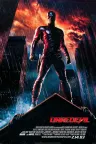
Fox handed Daredevil to a director who’d wanted the job for years, cast Ben Affleck a year before the Gigli backlash, then trimmed his R-rated cut to PG-13 for theatres.
A DECADE BOUNCING BETWEEN STUDIOS
HOW THE RIGHTS MOVED THROUGH THREE STUDIOS BEFORE A FILM GOT MADE
20th Century Fox optioned the film rights to Daredevil in 1997 with Chris Columbus attached to direct. Marvel’s own 1996 bankruptcy left the option in limbo, and Fox eventually let it lapse. Marvel set the project up at Sony’s Columbia Pictures in 1999, only for Sony to drop it over an unresolved dispute about internet rights. Arnon Milchan’s New Regency picked up the character in 2000, with Fox signed on again, this time only to distribute rather than produce.
Mark Steven Johnson, a screenwriter who had wanted to write Daredevil for years, got the job once New Regency took over. His connection to the character wasn’t a career move. Growing up in Hastings, Minnesota, in a small town with little else to do, he read the comic as a kid: “It was a small town. About all we had were comic books and movies.” Producer Gary Foster has said Johnson came to him years before the film went into production and told him plainly: “There’s a property available or it’s going to be available called Daredevil. It’s my dream to make this movie.”
That dream came with a thin résumé attached. Johnson’s only prior directing credit was Simon Birch (1998), a modest, small-scale drama, not the kind of film that typically earns a writer-director control of a comic-book adaptation. He used what leverage he had to protect the source material: when studio executives pushed to drop Daredevil’s classic red costume for something less comic-accurate, Johnson fought to keep it.
A ROLE SWAP AND A STAR AT HIS PEAK
BEN AFFLECK, COLIN FARRELL AND THE PARTS THEY ALMOST PLAYED INSTEAD
Ben Affleck signed on to play Matt Murdock close to the height of his commercial standing, two years removed from Armageddon and coming off Pearl Harbor, and still months from the Gigli opening that would sour his box-office reputation for years afterward. Johnson has traced Affleck’s own connection to the character back to Kevin Smith, the filmmaker and comics writer who was both a friend of Affleck’s and the author of a well-regarded Daredevil run. “Ben was a fan of Daredevil because of Kevin Smith, so it ended up being him,” Johnson said.
Casting nearly went a different way. Colin Farrell was considered for Murdock himself before the studio settled on Affleck and moved Farrell to the villain instead. Farrell played Bullseye with his own Irish accent intact, a choice he has credited to Johnson rather than the studio, since the comics had never fixed the character’s origin. “That was Mark Steven Johnson’s idea,” Farrell said. “He said to me, because it was never specified in the comic book where Poindexter, Bullseye, was from, ‘you can do it in the Irish accent,’” and Farrell said yes on the spot.
Jennifer Garner landed Elektra after an audition process Johnson has described as running through a long list of actresses, and she has said she wanted the physical demands of the role for their own sake, coming off a year playing a CIA officer on Alias: “I was so obsessed with fighting after my year of Alias, and so into learning as much as I could.” She trained with a fight choreographer for six weeks, describing the schedule as “every single day for six weeks, Saturdays and Sundays, no exceptions.”
LEARNING WHAT BLINDNESS ACTUALLY FEELS LIKE
THE BLIND CONSULTANT WHO PREPARED AFFLECK, AND THE EFFECT BUILT TO SHOW HIS WORLD
To prepare Affleck for the role, the production brought in Tom Sullivan, a blind motivational speaker, to work through the gestures and daily rhythms of living without sight rather than a performed approximation of them.
“One of the things I was interested in for that movie was not just looking blind or coming across blind but knowing what it felt like… He was really patient with me. I thought that was the most interesting thing about the movie, frankly.”
Ben Affleck, on working with blind consultant Tom Sullivan
On screen, Murdock’s radar sense was rendered by the effects house Digital Domain, under visual effects supervisor Nikos Kalaitzidis, by taking footage shot for the scene and digitally reworking it into a sonar-like image, described by the studio as “a computer generated interpretation of how this blind superhero might actually ‘see.’” Reaction from disability advocates was more measured than the marketing around the film. Brent Hopkins of the American Foundation for the Blind welcomed a blind lead in a major studio film while pushing back on the premise behind his abilities: “You tend to get this ‘superhero’ portrayal… when in reality, there are lots of blind people out there doing lots of things. They are normal people who enjoy everyday, normal things. To live with a disability, you don’t have to be a superhero.”
THE MOVIE FOX WOULDN’T LET HIM RELEASE
WHY AN R-RATED FILM BECAME A PG-13 ONE, THEN WENT BACK TO R ON DVD
Johnson shot Daredevil as an R-rated film. Fox pushed it toward PG-13 as it neared release, wanting the widest possible audience less than a year after Spider-Man had broken box-office records under that same rating. The cuts weren’t small: Johnson has said a significant stretch of character material was removed for the theatrical version, on top of trims made for pacing.
“Looking back on it, one of the mistakes I made with the film was wanting to put everything in. I wanted to do Daredevil’s origin story, and I wanted to do the Elektra Saga and I wanted to introduce Bullseye and Foggy.”
Mark Steven Johnson, on the theatrical cut
In November 2004, Fox released an R-rated director’s cut on DVD that restored roughly thirty minutes of footage, including a subplot involving a murdered sex worker and Murdock’s client Dante Jackson, played by the musician Coolio, along with darker material built around Bullseye. Johnson has called it a more complete version of the film. The two cuts have never been reviewed as a single, settled film: the theatrical version is the one Rotten Tomatoes and Metacritic scored on release, while the director’s cut built its own, generally more favourable reputation among the people who sought it out afterward.
THE REWATCH
A NUMBER-ONE OPENING, A MIXED RECORD, AND A DETOUR BOTH LEADS OUTGREW
Daredevil opened on 14 February 2003 to $40.3 million domestically, a Presidents’ Day weekend record at the time, on its way to $102.5 million domestic and $179.2 million worldwide against a $78 million budget. It topped the box office for two straight weeks. Reviews landed closer to the middle: Rotten Tomatoes lists the theatrical cut at 42% from critics against a 35% audience score, and Metacritic’s aggregate sits at 42.
Some of that mixed response focused on a single casting choice. Johnson cast Michael Clarke Duncan, a Black actor, as Wilson Fisk, the Kingpin, a character drawn white in the comics for decades. “Oh yeah, I got a lot of blowback,” Johnson has said of the reaction. “It’s the strangest Catch-22, because you want to have opportunities for everybody, but then you get killed for that from some fans.”
Daredevil landed between two of Marvel’s biggest early hits, 2002’s Spider-Man and 2004’s X2, and its middling reception became one of the data points behind a broader mid-decade wariness about which Marvel characters outside the mutants and the wall-crawler could actually open a movie. For a first watch, it sits in the Marvel movies in release order guide between those two films, in the same connected scope, and stands as Marvel’s second theatrical attempt, after Blade, at a hero built for an R rating a studio wouldn’t fully commit to in cinemas.
QUICK ANSWERS
DAREDEVIL WATCH QUESTIONS
Do I need to watch anything before Daredevil?
No. It’s a self-contained origin story and works as a starting point on its own, separate from the MCU’s own continuity.
Should I watch the theatrical cut or the director’s cut?
The R-rated director’s cut, released on DVD in November 2004, restores about thirty minutes Fox removed from the PG-13 theatrical version and is generally regarded as the stronger cut, including by Mark Steven Johnson himself.
Which Marvel Marathon guides include Daredevil?
It appears in the Marvel movies in release order guide, between Spider-Man and X2 in that connected scope. Marking it watched above updates your progress there and on the main tracker.
EDITORIAL NOTES
SOURCES AND UPDATES
Development, casting, production and box-office details are checked against contemporaneous and retrospective trade reporting, official studio materials and on-the-record cast and crew interviews, cited individually below.
- Post Bulletin: Comics fan hits big time with Daredevil, on Mark Steven Johnson’s childhood in Hastings, Minnesota
- SlashFilm: Tales From The Box Office, on Daredevil’s development, its PG-13 theatrical cut and the R-rated director’s cut
- Yahoo Entertainment: Mark Steven Johnson looks back on Daredevil at 20, on casting, the Kingpin backlash and the theatrical cut
- CBR: everyone who almost played Matt Murdock instead of Ben Affleck, on the Affleck/Farrell casting swap
- CBR: Colin Farrell on playing Bullseye and keeping his own accent
- CBR: Jennifer Garner on being cast as, and training to play, Elektra
- ComicBook.com: Ben Affleck on working with blind consultant Tom Sullivan
- Digital Domain: official studio account of building Daredevil’s radar-sense visual effect
- ABC News: disability advocates’ reaction to Daredevil’s portrayal of blindness
- Rotten Tomatoes: Daredevil (2003) critic and audience scores
- Metacritic: Daredevil (2003) critic and user scores
- Box Office Mojo: Daredevil (2003) budget, opening weekend and total box office