MARVEL MARATHON DEEP DIVE
CAPTAIN
AMERICA.
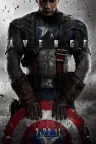
Chris Evans turned Captain America down more than once over anxiety and a six-picture deal, while Lola VFX spent months digitally shrinking him into the scrawny Steve Rogers the role began as.
A SIX-PICTURE DEAL, AND A STAR WHO WASN’T SURE HE WANTED IT
WHY CHRIS EVANS SAID NO BEFORE HE SAID YES
Chris Evans turned Captain America down more than once before accepting the part. He’s since spoken candidly about the anxiety behind that hesitation, describing a shift in how fame and promotion felt to him in his late twenties: “I remember in my late 20s having a real shift in how I felt on set, how I felt promoting films: a little more anxiety, a little more uncertainty.” The multi-picture contract itself was part of the problem; Marvel’s deal committed him to years of future films, and Evans has said plainly: “I like my privacy. The good thing about movies is there’s a lot of freedom built in: you make a film and then you have time off.”
What changed his mind was partly a conversation with Robert Downey Jr., who shared his agent and had already lived through becoming the face of a Marvel franchise. Downey told Evans the role could “expand his opportunities as an actor, not constrict them,” reframing the long commitment as a door opening rather than closing. Evans has since called it the right call, in terms that go beyond the films themselves: “Without these movies, I wouldn’t be directing.”
A VFX PROBLEM WITH NO ESTABLISHED PLAYBOOK YET
HOW LOLA VFX BUILT A CONVINCINGLY SCRAWNY STEVE ROGERS
Before Steve Rogers takes the Super Soldier Serum, he’s written and shot as a frail, undersized recruit, played by the same physically transformed Evans who spends the rest of the film as Captain America. Digital face-swapping wasn’t yet a standard tool in 2011, so overall visual effects supervisor Chris Townsend and effects house Lola VFX built a bespoke solution instead, tested well before the main shoot: “We asked Lola to do a test which we shot in England. We took a really big guy and smaller guy and we said, ‘Make the big guy look like the smaller guy.’ They came back with some pretty phenomenal results, and we then based our entire shooting on that.”
Lola ultimately handled roughly 300 shots built around Evans’s digitally slimmed body and physicality, built frame by frame rather than through a single automated process, making it among the most demanding effects assignments the studio had taken on to that point. The same team separately reworked Hugo Weaving’s face for Red Skull in another 80-odd shots, extending his nose and stripping away skin texture digitally rather than relying solely on prosthetics.
A DIRECTOR WHO’D ALREADY MADE THIS KIND OF FILM ONCE
JOE JOHNSTON’S PULPY, SERIAL-ADVENTURE APPROACH
Joe Johnston had directed 1991’s The Rocketeer, a Depression-era pulp-adventure film frequently cited as this movie’s clearest stylistic ancestor, and had worked as an effects artist on the original Star Wars trilogy and Raiders of the Lost Ark before ever directing a film of his own. He’s pointed to the Republic film serials of the era, rather than modern war films, as the real root of his approach: “It was also the period of the great comic book serials with Commander Cody and all of that stuff, where all of the Republic serials were sort of the genesis of a lot of things like even Raiders of the Lost Ark.”
“Obviously it takes place in the 40s and there are lots of scenes that reflect that, but there is also a whole other world that is sort of 40s futurism. Like all of Schmidt’s stuff is sort of beyond anything they had then, but that’s okay, because he’s a super villain genius scientist.”
Joe Johnston, on blending a grounded 1940s setting with heightened, pulpy science fiction
A VILLAIN WHO THOUGHT THE NAZIS WEREN’T RADICAL ENOUGH
RED SKULL, THE SERUM, AND THE CHARACTER WHO OUTLASTED THE FILM
Hugo Weaving played Johann Schmidt, Red Skull, as a figure who’d broken from Hitler’s own command rather than simply served it, a choice the film uses to put HYDRA at arm’s length from the historical Nazi regime it otherwise surrounds itself with. Weaving leaned into the character’s self-regard rather than playing him as a straightforward extension of the real war: “I thought it would be a lot of fun to play a classic über-Nazi, someone who thought Hitler was a pussy!”
Stanley Tucci’s Dr. Abraham Erskine, the scientist behind the Super Soldier Serum that transforms Rogers, exists mainly to set the story’s stakes before exiting early, while Hayley Atwell’s Peggy Carter proved to have the longest afterlife of any character introduced here: she returned in the Marvel One-Shot Agent Carter, then the ABC series it spun into, and in multiple later MCU films, outlasting most of this film’s own cast in the role.
THE REWATCH
THE LAST PIECE BEFORE THE AVENGERS, DELIVERED WITHOUT MEETING ANY OF THEM
Captain America: The First Avenger opened to $65.1 million domestically and finished with $176.7 million in the US and $370.6 million worldwide, reviewed solidly rather than spectacularly: Rotten Tomatoes lists an 80% critics’ score, with its consensus praising “plenty of pulpy action, a pleasantly retro vibe, and a handful of fine performances,” calling it “solidly old-fashioned blockbuster entertainment.” Metacritic’s more measured 66 reflects a reception that was positive without matching Thor’s or X-Men: First Class’s warmer notices earlier that year.
Unlike Thor or Iron Man 2, Steve Rogers spends the entire main story without crossing paths with any other future Avenger; the connective tissue arrives only in the final scene, when Rogers, having crash-landed the HYDRA plane Valkyrie into Arctic ice to save American cities, wakes up decades later in the present day. For a first watch, Captain America: The First Avenger sits in the Marvel movies in release order guide directly after X-Men: First Class, as the final piece Marvel Studios put in place before The Avengers the following year.
QUICK ANSWERS
CAPTAIN AMERICA: THE FIRST AVENGER WATCH QUESTIONS
Do I need to watch Iron Man, Thor or Iron Man 2 before this one?
No. Captain America: The First Avenger is set in the 1940s and tells a self-contained origin story with no reliance on the other Phase One films.
Does this connect to The Avengers?
Yes, though only at the very end. Steve Rogers wakes up in the present day after decades frozen in ice, directly setting up The Avengers the following year.
Which Marvel Marathon guides include Captain America: The First Avenger?
It appears in the Marvel movies in release order guide, directly after X-Men: First Class. Marking it watched above updates your progress there and on the main tracker.
EDITORIAL NOTES
SOURCES AND UPDATES
Development, casting, production and box-office details are checked against contemporaneous trade reporting and on-the-record cast and crew interviews, cited individually below.
- TheThings: Chris Evans on turning the role down, his anxiety and Robert Downey Jr.’s advice
- fxguide: Chris Townsend and Lola VFX on building “Skinny Steve” and reworking Red Skull’s face
- SlashFilm: Joe Johnston on the Republic serials behind the film’s tone and blending the 1940s with pulp science fiction
- Gizmodo: Hugo Weaving on playing Red Skull as a figure more extreme than Hitler himself
- Box Office Mojo: Captain America: The First Avenger opening weekend, domestic and worldwide box office
- Rotten Tomatoes: Captain America: The First Avenger critic score and consensus
- Metacritic: Captain America: The First Avenger critic score